

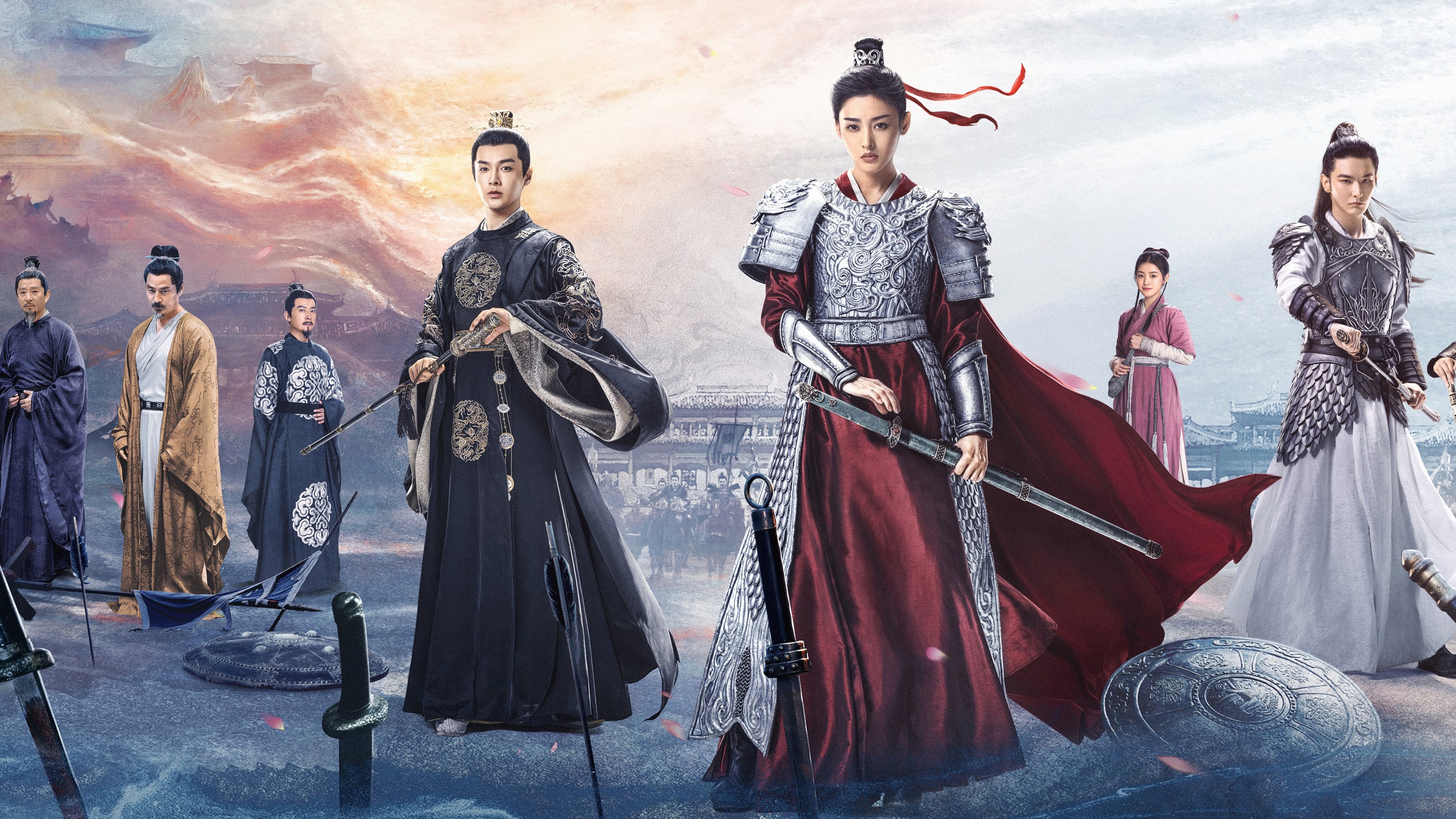
Introduction: What is Fighting for Love (2024)
Fighting for Love — also known by its Chinese name A Mai Cong Jun — is a 2024 Chinese historical-military drama that aired in 36 episodes beginning January 31, 2024. (CPOP HOME) The series follows the journey of A Mai (played by Zhang Tianai), a noblewoman whose family is brutally murdered. Driven by vengeance, she disguises herself as a man, infiltrates the army, and rises through the ranks — ultimately becoming a formidable general. (Chasing Dramas)
The story weaves together themes of identity, revenge, war, loyalty, and love — offering a blend of military action, historical drama, and romantic tension.
What Works — Strengths of the Drama
A strong, compelling female lead & transformation arc
From the early episodes, A Mai’s transformation from a traumatized orphan to a hardened warrior is portrayed with grit and realism. According to one review, the early part of the drama “exceeded expectations,” thanks to A Mai’s “captivating character with extreme survival skills and a devious wit.” (Chasing Dramas) The portrayal avoids the overly glamorous tropes common in many costume dramas — instead, the heroine endures hardship, gets dirty, rides horses, wields weapons, and fights in muddy, grimy battle scenes. (Chasing Dramas)
That raw realism gives the drama a sense of authenticity: it's not just about the “pretty warrior,” but about a woman enduring pain, hardship, and moral dilemmas — which can be more moving and believable than polished fantasy versions.
War, action and military plot — a refreshing departure from palace/fantasy dramas
Rather than leaning on palace intrigue or fantasy tropes, Fighting for Love emphasizes battlefield struggles, strategy, and soldier camaraderie. Many viewers appreciate this heavier focus on war and military life, seeing it as a “pleasant departure” from the more typical fantasy romances. (Chasing Dramas)
The battles, tactical decisions, and A Mai’s leadership on the battlefield add weight and stakes to the narrative. This gives the drama more substance — not just a love story, but a story about war, duty, revenge, and survival.
Visually grounded and gritty tone
The production intentionally avoids the glossy, overly-filtered look that many costume dramas adopt. Instead, the visual style is more grounded: realistic costumes, natural skin tones, dirt and grime when appropriate, and settings that feel lived-in rather than idealized. (Hanfu Forum & Community) This aesthetic supports the drama’s themes of hardship, struggle, and war — making it feel more immersive and raw.
It’s refreshing in a landscape saturated with fantasy epics to see a series that attempts honest, down-to-earth depiction of medieval warfare and its consequences.
What Falters — Where the Drama Loses Its Way
Tonality shift and storytelling ambition overload
While the first half of the series draws praise for its character focus and war-drama authenticity, many viewers feel that the second half loses that momentum. As the plot progresses, the drama attempts to juggle too many genres — romance, war, imperial politics, court intrigue — and in doing so ends up diluting its strengths. (Chasing Dramas)
One critic noted that what began as a compelling vengeance-and-war plot devolved into a “hodgepodge” of palace conflicts and cliché romance tropes. (Reddit) As a result, the central story of A Mai’s revenge and personal growth gets overshadowed. (Chasing Dramas)
Weak romantic chemistry and unbalanced relationships
Many fans on community forums felt the romantic subplot — implied by the title — was poorly handled. One Reddit user wrote:
“There was zero lead up to what passed for romance with the leads, which resulted in zero chemistry.” (Reddit)
Another criticism was that the main male lead (ML) felt unconvincing, sometimes acting immaturely, making their age and character inconsistent with the gravitas of the plot. (Reddit) The relationship dynamics often felt forced, jarring and unbalanced, especially compared with the strength and agency of A Mai. (Chasing Dramas)
For viewers mainly seeking romance, this mismatch between the title (which promises love) and the actual development can feel disappointing.
Declining focus in second half — plot becomes convoluted
As the drama progresses, the narrative gets bloated: between political intrigue, war strategies, multiple side-characters, and shifting loyalties, the storyline often loses clarity. According to one reviewer, the final rating dropped to 5.8/10 as all these elements caused the drama to “lose its luster.” (Chasing Dramas)
Some fans admitted they kept watching mainly out of curiosity or commitment, not because the plot remained compelling. >!“By the end it could turn into an S+!”!< wrote one hopeful Redditor (before airing), but many felt the end result failed to deliver. (Reddit)
In addition, for some viewers, the shift from war-drama to palace politics and romance turned out to be a letdown — seeming almost contradictory to the powerful war narrative introduced earlier. (Reddit)
Themes & What the Drama Tries to Say
Identity, duty, and revenge vs. humanity. At its core, Fighting for Love is about a woman forced to forsake her identity to survive and seek vengeance. A Mai’s journey shows how war, trauma, and loss shape a person — and how vengeance can cost not only her family, but consume one’s life if not careful.
War and its moral ambiguity. By focusing on the battlefield and the realistic consequences of war, the drama reminds us that victory often comes with sacrifice — not just of soldiers, but of innocence, relationships, and humanity.
Love as sacrifice, not fairy tale. Unlike many romance dramas where love remains idealized, here romance is sidelined by duty — sometimes faded, sometimes overshadowed by the weight of responsibility. It suggests that when one takes on war and leadership, love isn’t the priority; survival, justice, and purpose are.
Gender roles and female empowerment (with caveats). On paper, the show delivers a strong message: a woman rising above gender constraints, fighting battles, leading armies. But in execution, the romantic and political entanglements in the second half somewhat undercut that message, as the heroine’s arc becomes tangled in dependencies and love-interest tropes.
Final Verdict: Worth Watching — But With Expectations Adjusted
If you’re into gritty war dramas with a strong female lead: the first half of Fighting for Love will likely draw you in. Its portrayal of hardship, survival, and battlefield tactics — combined with grounding visuals and a heroine with agency — make it a worthwhile watch.
If you’re looking for romance or a satisfying adaptation of revenge narratives: it gets complicated. The second half tends to fumble the balance between war, love, politics, and revenge — often diluting what was compelling early on. Romance feels tacked on rather than earned; political intrigue becomes convoluted.
In short: Fighting for Love has a powerful premise — and for a while, it lives up to it. But by the end, it struggles under the weight of its own ambition, leaving a mix of “what could have been” and “some good moments.”
Why the Title Feels Misleading — And What That Says About Expectations
Many fans and reviewers lament the English title. One commenter bluntly remarked:
“Ugh. That totally diminishes A Mai’s contribution.” (Chasing Dramas)
Indeed — “Fighting for Love” implies a romance-centered story, but the core is really A Mai’s personal journey, war, revenge, and identity. The “love” aspect often takes a backseat to politics, bloodshed, and duty. (Chasing Dramas)
That mismatch may lead to disappointment in viewers expecting a sweeping love story. But if one approaches the drama as a tale of vengeance, war, and survival — with romance as a side note — it can be appreciated on its own merits.
My Personal Take: Mixed Yet Memorable
I think Fighting for Love is bold in its attempt to break from conventional costume-drama moulds. The decision to center on a female general disguised as a man, to portray the dirt, blood, and harshness of war — those are commendable. A Mai’s journey feels emotionally grounded, and the early episodes genuinely had me invested.
But I can’t deny the disappointment in the latter half: the diluted focus, the weak romance, the messy plotting. It’s a case of great potential that wasn’t fully realized. Still — for fans of war dramas, or those looking for a female-led story with grit — it’s worth a watch, especially for the early payoff.
If you like, I can also write a spoiler-heavy breakdown of the most significant moments (plot twists, character arcs, endings) in Fighting for Love — that way you can see what works and what doesn’t, and decide whether it’s for you. Do you want me to build that for you now?